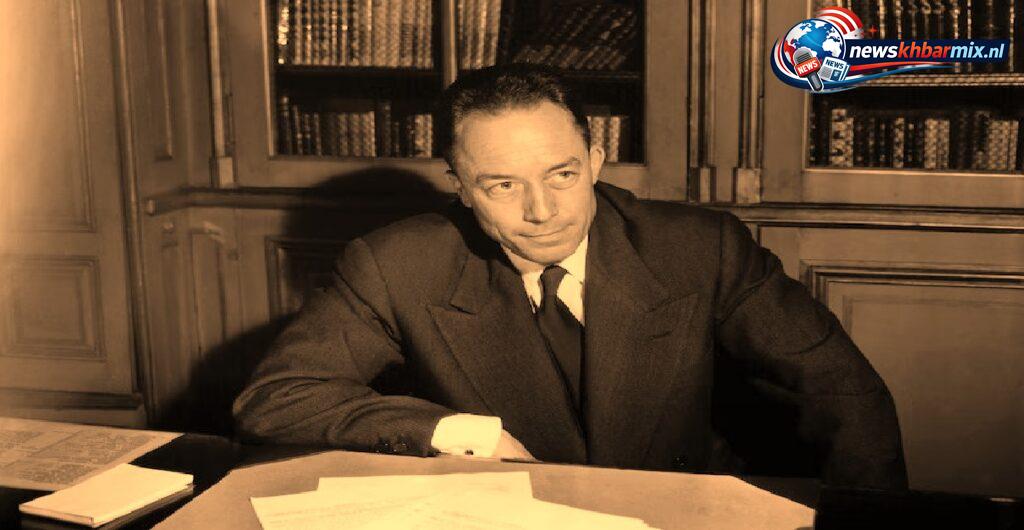
Albert Camus is een van de meest invloedrijke schrijvers en denkers van de twintigste eeuw. Zijn werk draait om existentiële vragen over de zin van het leven, de absurditeit van het menselijk bestaan en de zoektocht naar vrijheid in een wereld zonder vaste betekenis. Door zijn romans en filosofische essays wist Camus complexe ideeën op een toegankelijke manier te verwoorden, waardoor zijn werk vandaag de dag nog steeds relevant is. In dit artikel bekijken we zijn leven, zijn belangrijkste ideeën en de blijvende impact van zijn denken op de moderne literatuur en filosofie.
CAMUS
- CAMUS
- Albert Camus is a French-Algerian writer and philosopher often associated with absurdism, so that fits the clue (“Franse absurdist (5)”).
Meer informatie over CAMUS
Albert Camus was a French-Algerian writer, journalist, and philosopher (1913–1960), best known for his role in shaping what is often called “absurdism” in 20th-century thought.
At the core of his philosophy is the idea that human beings naturally search for meaning in life, but the universe does not provide any clear or inherent answer. That clash—between our desire for meaning and a silent, indifferent world—is what he called the absurd. Rather than despairing, Camus argued for living with clarity and defiance in the face of that condition.
Some of his most important works
- The Stranger (L’Étranger, 1942): a novel about emotional detachment and moral indifference, often read as a key expression of the absurd.
- The Myth of Sisyphus (1942): a philosophical essay where he explicitly develops absurdism, using the Greek myth of Sisyphus as a metaphor for human existence.
- The Plague (La Peste, 1947): a novel about a town facing a deadly epidemic, often interpreted as a reflection on solidarity, suffering, and human resilience.
Camus is sometimes grouped with existentialists, though he rejected that label. He was more focused on how to live ethically and lucidly without appealing to ultimate meaning or religious justification.
He received the Nobel Prize in Literature in 1957 for his body of work, becoming one of the youngest recipients ever.
“Bekijk ook: andere puzzels met (5) letters“